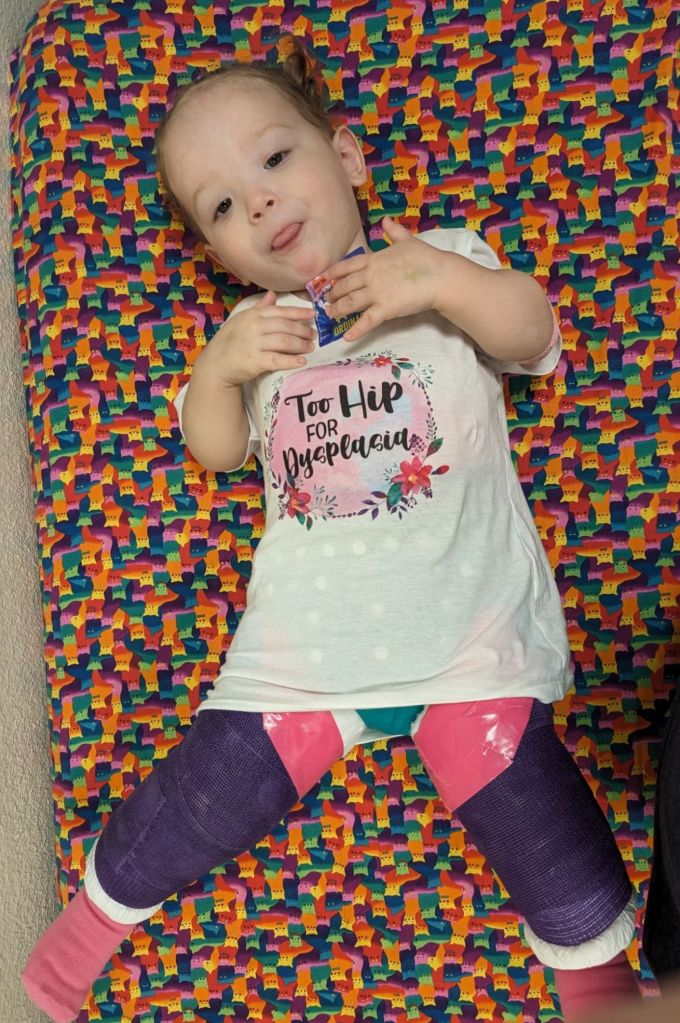
3 Days Before Surgery

Packing for Dallas at Midnight: A Moment of Clarity in the Chaos

It’s midnight, and I’m still packing for Dallas. I started around 9 PM, and I’ve managed to get one suitcase packed—though even that feels incomplete.

I can’t help but wonder: why am I moving so slowly? Why can’t I focus on this simple task?

The answer seems to lie in the clash between my racing thoughts and my sluggish body. The louder my brain gets, the slower my hands move. It’s as though the more anxious I feel, the less capable I am of doing anything at all. I glance at the baby monitor. There she is—my sweet girl, sound asleep in her crib, as peaceful as she can be. It’s a stark contrast to the chaos swirling in my mind.

Intrusive thoughts keep flooding in. I wish there were a mute button for my brain, just something to stop the noise for a few minutes so I can breathe.

What makes it worse, though, is when people ask me how I’m doing. How do you answer when you feel like you’re barely keeping it together? I’m not eating much. I’m staying up late because my brain is too loud to sleep. When I do sleep, it’s fitful and haunted by nightmares that leave me waking up in a sweaty panic. I’m terrified of the future, of what’s to come. I can’t think straight, I can’t focus, and the simplest tasks feel impossible—like packing a bag.

Packing, in particular, feels like a painful reminder that this isn’t just some nightmare. This is real. It’s been real ever since our daughter’s diagnosis, the day we saw the pediatric orthopedic surgeon for the first time. But I’ve been able to push it to the back of my mind, to pretend for a while that it isn’t happening. It’s easier that way. I’ve been dissociating, going through the motions of day-to-day life, trying to enjoy the small moments. We took her to the zoo for the first time, and I allowed myself to believe everything was okay, if only for a few hours.

But now, with every item I fold and tuck into the suitcase, it hits me all over again. This is happening. And I don’t know how to make sense of it all.

I guess, for now, I’ll go finish packing. But I don’t think I’ll be able to ignore it much longer.

Caring for a Toddler in a Spica Cast: A Real-Life Challenge

Having a toddler in a spica cast—a full-body cast that immobilizes the hips and legs—presents a unique set of challenges that can be both physically and emotionally taxing for both the child and their parents.

Physical Care:

A spica cast covers the child from the waist down, often up to the chest, and can make even the simplest tasks like sitting, moving, or going to the bathroom difficult. Here are some of the daily challenges:

  • Feeding and Sleeping: Since the cast limits mobility, your child may need help with feeding and sleeping. You may need to support them while they eat, and many parents end up getting creative with positioning during naps and nighttime sleep, propping them up with pillows or modifying their sleeping arrangements.
  • Mobility: Toddlers naturally want to be active, but with a spica cast, they can’t walk or run. Parents may have to carry them everywhere, or use special equipment like a stroller with extra support or a specially designed cast cover for easier transportation.
  • Hygiene: Keeping a toddler clean can be one of the most difficult tasks. Bathing is out of the question, so sponge baths or using baby wipes are often the go-to solutions. Keeping the cast dry is critical, as moisture can lead to skin issues or infections.

Emotional and Psychological Impact:

The emotional toll of seeing a toddler go through this can be just as tough as the physical challenges. Little ones don’t fully understand why they can’t move freely or do the things they love. As a parent, you might see:

  • Frustration and Meltdowns: Toddlers can get easily frustrated when they can’t do basic tasks like running, climbing, or playing with friends. Their usual behavior can change as they process the restrictions on their body.
  • Separation Anxiety: Being immobilized often means that toddlers want to be held or carried around more, which can be exhausting for parents, especially when combined with disrupted sleep and added stress.
  • Feeling “Different”: As toddlers grow more aware of their surroundings, they may notice that other children are able to run and play freely. This can create feelings of isolation or sadness, and it’s tough for parents to see their child feeling different from their peers.

Practical Tips for Parents:

  • Be Prepared for Changes: The first few days or weeks may be the toughest as you adjust to new routines. It’s important to set realistic expectations and lean on your support network. It can take time to figure out the best ways to manage everyday activities.
  • Comfort and Distraction: Use toys, books, and games that can be done in bed or on the couch. Creating a cozy and comfortable space for your child can help them feel more relaxed and distracted from their discomfort.
  • Stay Positive: It’s easy to get overwhelmed, but staying positive can make a huge difference. The recovery process is temporary, and although it feels long, there’s light at the end of the tunnel. Your toddler is looking to you for strength, and your ability to stay calm and supportive can help them through the hardest days.
  • Keep Communication Open: If your toddler is old enough, encourage them to express how they feel. Talk to them about their cast, explain the healing process, and reassure them that it’s only for a short time.

The Reward:

As difficult as it can be, caring for a toddler in a spica cast is a reminder of how resilient kids can be—and how strong the love between a parent and child is. Though the road may feel long, there is light at the end of the tunnel. Once the cast comes off, your child will be able to resume all the activities they love, and you’ll both have learned invaluable lessons in patience, love, and resilience.

What is Hip Dysplasia?

Upon hearing about our daughter’s diagnosis, many of you have asked, “What is Hip Dysplasia?” So, let’s talk about it.

What is Hip Dysplasia?

Hip dysplasia is a condition where the hip joint doesn’t develop properly, meaning the ball of the thigh bone (femur) doesn’t fit securely into the socket of the hip bone. It’s like a puzzle piece that doesn’t fit quite right. This can cause the joint to be loose or unstable, which may lead to pain, difficulty moving, and in some cases, arthritis later in life.

In infants and toddlers, hip dysplasia is often detected during routine check-ups. If left untreated, it can cause problems with walking and lead to joint damage as it grows. Early treatment is important, and in some cases, babies and young children may need multiple surgeries to help correct the issue. After surgery, they may need to wear a spica cast—a full-body cast that helps keep the hip joint in place while it heals. This can be challenging for both children and parents, but it is an important part of the treatment process.

While hip dysplasia is commonly seen in babies and young children, it can also develop in adults, sometimes with no symptoms until later in life. For some people, the condition is mild and may cause few issues, while others may need ongoing treatment, including surgery, to manage it.

Early diagnosis and treatment can make a big difference in the long-term outcome, helping children grow up with less pain and fewer complications.

Who is Meighan? She’s just Momma now.

The Lost Identity of Motherhood—and the Journey to Find Myself Again

I used to wonder what happened to moms after they had children. Where did they go? It was almost symbolic: they seemed to slowly disappear from their own photos, replaced by baby pictures, and for some reason, that used to straight piss me off. I’d find myself wondering: How could someone get so completely lost in motherhood?

Now, I get it. I really do.

There is a loss of identity when you become a mom. At least, that’s been my experience. You become consumed by things you never thought you’d care so much about—milk intake, nap timings, diaper changes, meal plans, teething remedies. The list goes on and on. And somewhere along the way, you forget yourself a bit. You forget how to talk about anything other than the endless cycle of mothering. The things that used to bring you joy—your hobbies, your passions, your interests—fall to the wayside. Slowly, your world becomes smaller, and your conversation more limited. Let’s be honest, it can get a little… dull.

But then, you find other moms. Women who, before motherhood, you might not have connected with. But now, you’re all in the same boat—rattling around in this lost property box together. And in some way, it’s comforting. You’re not alone in this strange, beautiful chaos.

I know deep down that I’ve gone AWOL since becoming a mom. I’ve almost forgotten that there’s a world out there, separate from motherhood, that I can still be a part of.

So, I’m slowly reclaiming my “me-ness” again. It’s a work in progress, but it’s happening. And when I do, I notice something beautiful: Ady enjoys it more, too. It feels more authentic. Now, instead of just playing “Ms. Moni” on repeat, we have little dance parties to the music I love. I’ve even started taking the time to look half-human again in the mornings—putting my old face back on. These small changes, as trivial as they may seem, are helping me reconnect with myself, and I’m pretty sure they’re good for all of us.

Motherhood is a balancing act. You’re helping this tiny human develop their identity, but it’s just as important not to forget your own. It’s okay to be both: a mom and a person, with interests, dreams, and a self that existed long before motherhood.

And every little step I take to reclaim that feels like a victory. Here’s to becoming Meighan again, instead of just Momma.